
Preparing Concrete Driveways, Sidewalks, and Steps for Winter with Proper Sealing
If you want your concrete to survive another Nebraska winter without developing new cracks or surface damage, sealing it before the first hard freeze is one of the smartest things you can do. Around Bennington and Omaha, we see the same pattern every spring: homeowners discovering damage that could have been prevented with some basic fall preparation.
greg beckard – nov 23, 2022
Why Winter Destroys Unprotected Concrete
Concrete might look solid and impenetrable, but it’s actually full of tiny pores and capillaries. When water gets into those spaces and freezes, it expands by about 9%. That expansion creates internal pressure that cracks and damages concrete from the inside out.
Here in Bennington and the Omaha area, we get hit with the worst possible combination for concrete:
Constant freeze-thaw cycles: It’s not unusual to have 30 to 50 freeze-thaw cycles in a single winter. Water seeps in during the day when it’s warm, then freezes at night. Each cycle creates a little more damage.
Heavy moisture exposure: Snow, ice, rain, and slush mean your concrete is wet for months. More water means more opportunities for freeze-thaw damage.
Deicing chemicals: The salt and chemicals we use to melt ice actually pull more moisture into concrete while also chemically attacking the surface. It’s a double hit of damage.
Temperature swings: One day it’s 45 degrees and sunny, the next we’re down to 10 degrees. These rapid changes stress concrete and accelerate deterioration.
The result? Cracks that weren’t there in November suddenly appear by March. Surface spalling that creates rough, flaky patches. Edges that crumble. All preventable with the right preparation.
How Concrete Sealing Protects Against Winter Damage
Think of concrete sealer as a protective barrier that keeps water from penetrating the surface. If water can’t get into the concrete, it can’t freeze and expand inside. It’s that simple.
What sealing does:
Blocks water penetration: Quality sealers fill those tiny pores and create a waterproof barrier on the surface. Water beads up and runs off instead of soaking in.
Prevents chemical damage: Sealed concrete resists the harmful effects of deicing salts and chemicals. The sealer takes the hit instead of the concrete underneath.
Reduces surface scaling: That flaky, peeling surface damage happens when water freezes in the top layer of concrete. Sealing prevents water from getting there in the first place.
Slows deterioration: Even small amounts of protection compound over time. A sealed driveway lasts significantly longer than an unsealed one.
Makes cleaning easier: Salt residue, dirt, and stains sit on top of sealed concrete instead of penetrating. A quick rinse in spring cleans everything up.
The science is straightforward: keep water out, prevent freeze-thaw damage. Sealing is the most effective way to do that.
For comprehensive information about sealing options and benefits, visit our concrete sealing services page.
The Science Behind Concrete Sealing
Understanding how sealers work helps you appreciate why they’re so effective against winter damage.
Concrete porosity: Concrete is made up of cement, aggregate (stone and sand), and water. As it cures, some of that water evaporates, leaving behind tiny connected spaces throughout the material. These pores and capillaries create pathways for water to travel into and through concrete.
Water absorption: Unsealed concrete can absorb significant amounts of water, especially during freeze-thaw conditions when surface cracks develop. Once water is inside, it follows the paths of least resistance, spreading throughout the concrete.
Freeze-thaw mechanism: When water freezes, it doesn’t just expand in place. It creates hydraulic pressure that pushes outward in all directions. In confined spaces like concrete pores, this pressure can exceed the concrete’s tensile strength, causing internal cracking.
How sealers intervene: Penetrating sealers chemically react with the concrete to create a water-repellent barrier within the pores. Topical sealers create a protective film on the surface. Both approaches significantly reduce water absorption.
The result: Studies show that properly sealed concrete absorbs 70 to 95% less water than unsealed concrete. Less water absorption means dramatically less freeze-thaw damage over the winter months.
This isn’t just theory. We see it every year: sealed driveways and sidewalks emerge from winter in great shape, while unsealed concrete shows new damage.
How to Seal Concrete: The Right Way
Whether DIY or hiring professionals, proper sealing follows these steps:
Step 1: Inspect and Repair (1-2 weeks before sealing)
What to look for:
- Cracks (any size)
- Spalling (flaking, peeling surface)
- Settlement or uneven areas
- Oil stains or discoloration
- Crumbling edges
Why repair first: Sealer can’t fix structural problems. Sealing over cracks just makes them waterproof cracks they’ll still get worse.
Repairs needed before sealing:
- Fill cracks under 1/4″ with concrete crack filler ($3-5/linear foot)
- Route and seal larger cracks ($5-8/linear foot)
- Patch spalled areas with concrete patch compound ($4-8/sqft)
- Grind down trip hazards or level with mudjacking
Timeline: Complete repairs 1-2 weeks before sealing to allow proper cure.
Step 2: Deep Clean (2-3 days before sealing)
Why this matters: Sealer bonds to concrete surface. Dirt, oil, or debris prevent proper adhesion.
Cleaning process:
- Sweep entire area thoroughly
- Pressure wash at 2,500-3,000 PSI
- Use concrete cleaner for oil stains
- Pay extra attention to edges and corners
- Remove all loose material
- Degrease any oil spots (TSP or concrete degreaser)
- Allow 48 hours to dry completely
Critical: Concrete must be completely dry before sealing. Test by taping plastic sheet to surface overnight if moisture appears underneath, concrete needs more drying time.
Bennington note: Clay soil means concrete takes longer to dry. In humid fall weather, allow 3-4 days after pressure washing.
Step 3: Apply Sealer (dry, 50°F+ day)
Weather requirements:
- Temperature: 50-90°F during application and for 48 hours after
- Humidity: Below 70% ideal
- Forecast: No rain for 48 hours minimum
- Wind: Light (strong wind causes uneven application)
Application methods:
For driveways and large areas:
- Pump sprayer (backpack or rolling style)
- Apply in even, overlapping passes
- Work in sections to maintain wet edge
For sidewalks and steps:
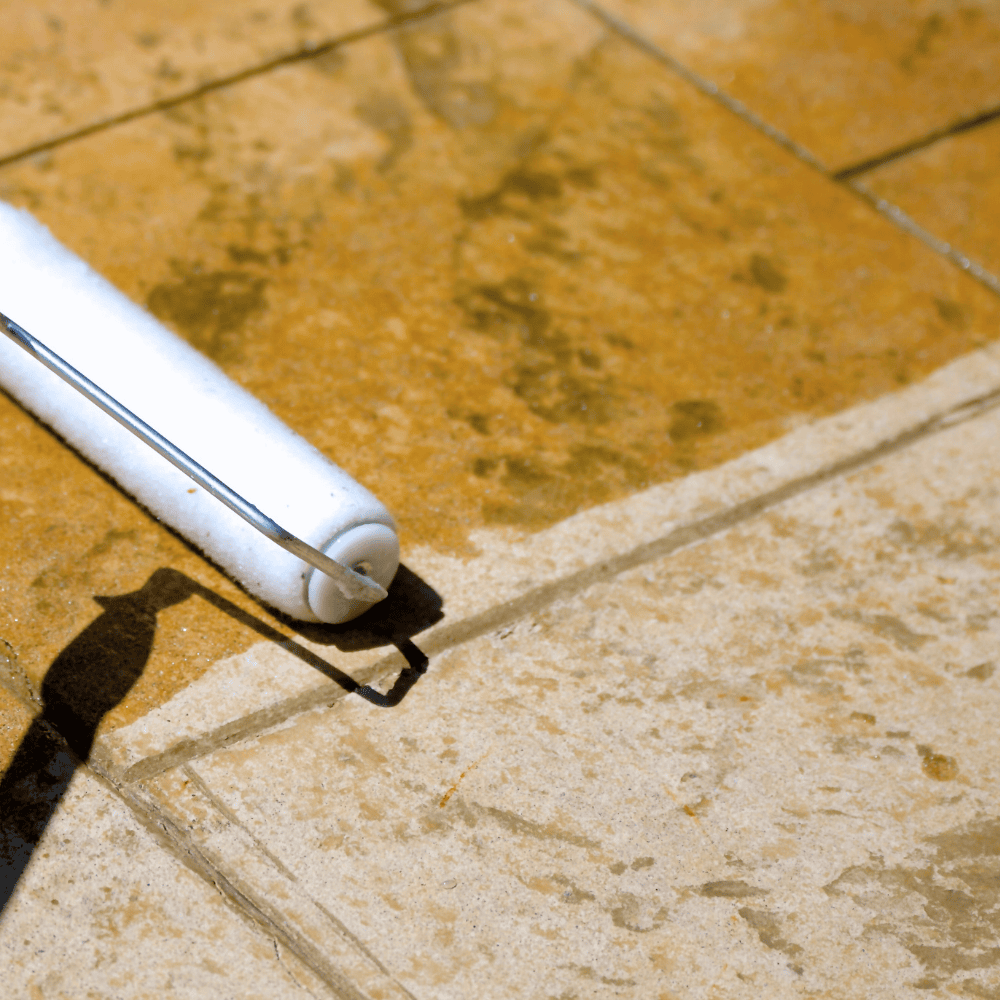
- Pump sprayer or paint roller
- Roller gives more control on vertical surfaces (steps, edges)
Application tips:
- Two thin coats better than one thick coat
- First coat: Let dry 2-4 hours
- Second coat: Apply perpendicular to first coat for even coverage
- Avoid puddles or thick spots (causes cloudy finish)
Amount needed:
- Penetrating sealer: 150-200 sqft per gallon
- Topical sealer: 250-300 sqft per gallon
- 400 sqft driveway: 2-3 gallons (two coats)
Cost (DIY):
- Quality sealer: $30-60/gallon
- 400 sqft driveway: $60-180 in materials
Cost (Professional):
- 400 sqft driveway: $200-400 installed
- Includes cleaning, prep, professional-grade sealer, equipment
Step 4: Cure and Protect
Cure timeline:
- Touch-dry: 1-4 hours (depends on temp/humidity)
- Foot traffic: 24 hours
- Vehicle traffic: 48-72 hours
- Full cure: 30 days
During cure period:
- Keep area dry (cover if rain threatens within first 24 hours)
- Avoid driving on surface (tire marks can occur during cure)
- Don’t apply anything else to surface
Full cure importance: Sealer reaches maximum effectiveness after 30 days. This is why early October sealing is ideal gives full month before temps drop.
Choosing the Right Sealer for Bennington/Omaha Winters
Not all sealers perform equally in Nebraska’s climate. Here’s what works best:
🏆 Penetrating Sealers (Best for Driveways/Sidewalks)
How they work: Absorb into concrete, chemically react to create water-repellent barrier within pores
Types:
- Silane: Penetrates deepest (up to 1/4″), best water repellency
- Siloxane: Penetrates moderately (1/8″), good balance
- Silicate: Densifies concrete surface, moderate water repellency
Pros:
- ✓ Breathable (allows moisture vapor to escape from below)
- ✓ Won’t peel or wear off
- ✓ Maintains natural concrete appearance
- ✓ Lasts 3-7 years
- ✓ Best for freeze-thaw protection
- ✓ No maintenance beyond reapplication
Cons:
- ✗ More expensive ($40-60/gallon vs $20-30 for topical)
- ✗ Doesn’t change appearance or add gloss
- ✗ Can’t apply over previous topical sealers
Best for: Driveways, sidewalks, steps, garage floors anywhere experiencing freeze-thaw and de-icing salt
Recommendation for Bennington: Penetrating silane/siloxane blend. Best water repellency for our climate.
Topical Sealers (Good for Decorative Concrete)
How they work: Create film on concrete surface
Types:
- Acrylic: Most common, available in gloss or matte
- Epoxy: Very durable but yellows outdoors
- Urethane: Highest durability, resists UV
Pros:
- ✓ Enhances color (ideal for stamped/stained concrete)
- ✓ Adds gloss or sheen
- ✓ Lower cost ($20-40/gallon)
- ✓ Easy to apply
Cons:
- ✗ Can peel or wear off (especially with snow removal)
- ✗ Requires reapplication every 1-3 years
- ✗ Can be slippery when wet
- ✗ May trap moisture if applied over damp concrete
Best for: Stamped concrete patios, decorative walkways, areas where enhanced appearance matters
Bennington consideration: Topical sealers take more abuse from snow plows and shovels. Budget for more frequent reapplication.
Comparison Chart:
| Feature | Penetrating | Topical |
|---|---|---|
| Lifespan | 3-7 years | 1-3 years |
| Freeze-Thaw Protection | Excellent | Good |
| Salt Resistance | Excellent | Fair-Good |
| Appearance | Natural (no change) | Enhanced (gloss/color) |
| Durability | Won’t peel/wear | Can peel/wear |
| Cost/Gallon | $40-60 | $20-40 |
| Maintenance | Low | Moderate |
| Best Use | Functional areas | Decorative areas |
Bottom line for Bennington winters: Penetrating sealers provide superior freeze-thaw protection and last longer, making them the better investment for driveways, sidewalks, and steps. Save topical sealers for stamped patios or decorative areas where appearance enhancement justifies more frequent reapplication.
What Concrete Sealing Costs in Bennington/Omaha
DIY Sealing Costs:
Materials (400 sqft driveway example):
- Pressure washer rental: $60-100/day (if you don’t own)
- Concrete cleaner: $20-40
- Concrete crack filler: $15-50 (if needed)
- Quality penetrating sealer: $80-180 (2-3 gallons)
- Pump sprayer: $30-100 (one-time purchase or rental)
- Total DIY: $200-470 first time
- Resealing in 3-5 years: $80-180 (materials only)
Time investment: 8-12 hours over 2-3 days (cleaning, drying, application)
Professional Sealing Costs:
Standard driveway (400 sqft):
- Complete service: $200-400
- Includes: Pressure washing, crack repair (minor), pro-grade sealer, equipment, labor
Long driveway (600 sqft):
- Complete service: $300-600
Sidewalk (4′ x 40′ = 160 sqft):
- Complete service: $80-160
Patio (12′ x 16′ = 192 sqft):
- Complete service: $100-200
Steps (typical set of 4-6 steps):
- Complete service: $75-150
Add-ons:
- Major crack repair: $5-10/linear foot additional
- Stain removal: $50-150 additional
- Surface preparation (grinding): $1-3/sqft additional
Cost vs. Value Analysis:
Scenario: 400 sqft driveway, unsealed vs. sealed
Without sealing:
- Year 1-5: No cost
- Year 6-10: Minor crack repairs ($200-400)
- Year 10-15: Increasing damage, multiple repairs ($800-1,500)
- Year 15-20: Major deterioration, replacement needed ($3,000-5,000)
- Total 20-year cost: $4,000-6,900
- Lifespan: 15-20 years
With sealing (every 3-5 years):
- Year 0: Initial seal ($300)
- Year 3: Reseal ($300)
- Year 7: Reseal ($300)
- Year 11: Reseal ($300)
- Year 15: Reseal ($300)
- Year 20: Minor crack repairs ($200)
- Total 20-year cost: $1,700
- Lifespan: 25-30+ years
Savings: $3,200-5,200 over 20 years + 5-10 years extra lifespan
ROI: Every $1 spent on sealing saves $3-4 in future repair/replacement costs.
What Needs to Be Sealed Before Winter
Not all concrete around your property needs sealing at the same frequency, but these areas should be priorities:
Driveways: These take the most abuse from traffic, snow removal, and deicing chemicals. Seal every 2 to 3 years, or sooner if water no longer beads on the surface.
Sidewalks: Public sidewalks and walkways need sealing both for protection and to maintain a safe, even surface. Freeze-thaw damage creates trip hazards. For professional sidewalk care, check out our concrete sidewalk services.
Steps and stoops: These are often overlooked but take serious abuse. Water pools on horizontal surfaces and in corners, making steps especially vulnerable to spalling and edge damage.
Patios: Even though they might not get as much traffic, patios are exposed to the same weather. Sealing protects your investment and keeps the surface looking good.
Garage floors: If your garage isn’t heated, the floor experiences freeze-thaw cycles too. Plus, tracked-in snow and salt create constant moisture.
Foundation walls: While not technically a winter issue, fall is a good time to seal foundation walls and prevent moisture problems.
Working with Professionals vs DIY Sealing
You can seal concrete yourself, but there are advantages to professional application:
Professional benefits:
- Commercial-grade sealers that outperform retail products
- Proper surface prep and cleaning equipment
- Experience knowing how much sealer to apply and how to apply it evenly
- Faster completion (what takes you a weekend takes pros a few hours)
- Warranty on the work
DIY considerations:
- Costs less in direct expense
- Requires renting or buying equipment (power washer, pump sprayer)
- Time-intensive with the learning curve
- Results depend heavily on your prep work and application technique
For large areas like driveways or if you have multiple areas to seal, professional work often makes more sense. For a small patio or single set of steps, DIY can work if you’re committed to doing it right.
Our Bennington concrete contractor services include professional sealing that’s done efficiently and correctly the first time.
Protecting Your Bennington Concrete Investment
Winter in Nebraska is inevitable, but winter damage to your concrete isn’t. Sealing your driveways, sidewalks, and steps before the first hard freeze is one of the highest-return investments you can make in your property.
The numbers are clear:
- Sealing costs: $200-400 every 3-5 years
- Concrete replacement avoided: $3,000-8,000+
- Added lifespan: 5-10 years
Your action plan:
If it’s still fall (temps above 50°F for next week):
- Inspect and repair damage this week
- Schedule professional sealing or buy supplies for DIY
- Seal before Thanksgiving if possible
If winter has arrived (consistently below 50°F):
- Repair critical issues (trip hazards, large cracks)
- Use concrete-safe de-icers all winter
- Set April reminder to seal in spring
If you’re reading this in spring/summer:
- Repair any winter damage now
- Seal by mid-October (don’t wait until November!)
- Enjoy peace of mind next winter
ConcreteAid serves Bennington, Omaha, and surrounding communities with:
- ✓ Professional concrete sealing (driveways, sidewalks, steps, patios)
- ✓ Pre-winter concrete inspections and repairs
- ✓ Commercial-grade sealers designed for Nebraska winters
- ✓ Experienced team familiar with local soil and climate challenges
Schedule your fall concrete sealing: Contact ConcreteAid
Don’t gamble with Nebraska winter. Seal your concrete now and avoid the spring repair bills.