
Epoxy vs Polyaspartic Garage Coatings in Omaha | ConcreteAid
Staring at oil-stained, dusty concrete every time you pull into your garage? That bare concrete isn’t just ugly it’s absorbing spills, generating dust that tracks into your home, and becoming harder to clean with each passing year. Professional garage floor coatings solve these problems while dramatically improving your garage’s appearance. But when researching coating options in Omaha, you’ll face a key decision: epoxy or polyaspartic? Here’s what you need to know to choose the right system for your garage, budget, and timeline.
greg beckard – october 3, 2021
Understanding Epoxy and Polyaspartic Coatings
When researching garage floor coatings, you’ll encounter two primary options: epoxy and polyaspartic systems. While both provide excellent protection and visual appeal, they differ in application methods, curing times, and performance characteristics.
Epoxy Coatings
Epoxy consists of two components, a resin and a hardener, that chemically react when mixed to form a rigid plastic material. Once cured, epoxy creates a thick, durable surface that bonds tightly to properly prepared concrete. The material has been used for industrial and commercial flooring for decades, with residential applications becoming increasingly popular as homeowners recognize the benefits.
Installation timeline: Epoxy typically requires 3-7 days before you can park vehicles on the surface. Day 1 involves surface preparation and primer application. Day 2 is the base coat and decorative flake broadcast. Days 3-7 are for curing, with full chemical resistance developing after 7 days. This longer timeline is epoxy’s main drawback for homeowners who need quick garage access.
Epoxy performs well in Omaha’s climate when properly installed. The material resists staining from oil, gasoline, and most household chemicals. It provides a seamless surface that’s easy to sweep and mop clean, eliminating the concrete dust that bare floors generate. Decorative color flakes can be broadcast into the epoxy while it’s still wet, creating an attractive speckled appearance that also adds texture for slip resistance.
The primary limitation of epoxy relates to UV stability. While this isn’t typically a concern in enclosed garages, epoxy can yellow or chalk if exposed to direct sunlight over time. For garage floors that don’t receive significant sun exposure through windows or open doors, this limitation is rarely an issue.
In Omaha’s climate, epoxy performs reliably in temperature-controlled garages. However, application requires temperatures above 50°F, making late fall and winter installations challenging. Spring through early fall (April-October) provides optimal installation conditions. See entire Epoxy coating services ConcreteAid offers.
Polyaspartic Coatings
Polyaspartic coatings represent newer technology that addresses some of epoxy’s limitations. Like epoxy, polyaspartic is a two-component system, but its chemical formulation allows much faster curing. Most polyaspartic floors can handle foot traffic within a few hours and vehicle traffic within 24 hours, significantly reducing the inconvenience of having your garage out of service.
Installation timeline: Polyaspartic’s rapid cure is its standout feature. Most installations are complete in 1 day, with foot traffic allowed after 4-6 hours and vehicle traffic after 24 hours. This means minimal disruption drop off your cars in the morning, and park them back in the garage the next evening.
Polyaspartic coatings offer superior UV stability compared to epoxy, maintaining their color and gloss even with sun exposure. They’re also more flexible than epoxy, which helps them resist cracking if minor concrete movement occurs due to settling or temperature changes.
Polyaspartic’s advanced chemistry and specialized application requirements contribute to its higher cost compared to epoxy typically $3-5 more per square foot. For many Omaha homeowners, the premium is worth it for faster turnaround and superior UV protection, especially in garages with windows or that frequently have doors open.
The faster cure time does present application challenges. Professional installers must work quickly and precisely because the material begins to set within minutes of mixing. This isn’t necessarily a drawback but does require experienced applicators who understand the material’s characteristics and timing requirements.
See the Polyaspartic coating offerings.
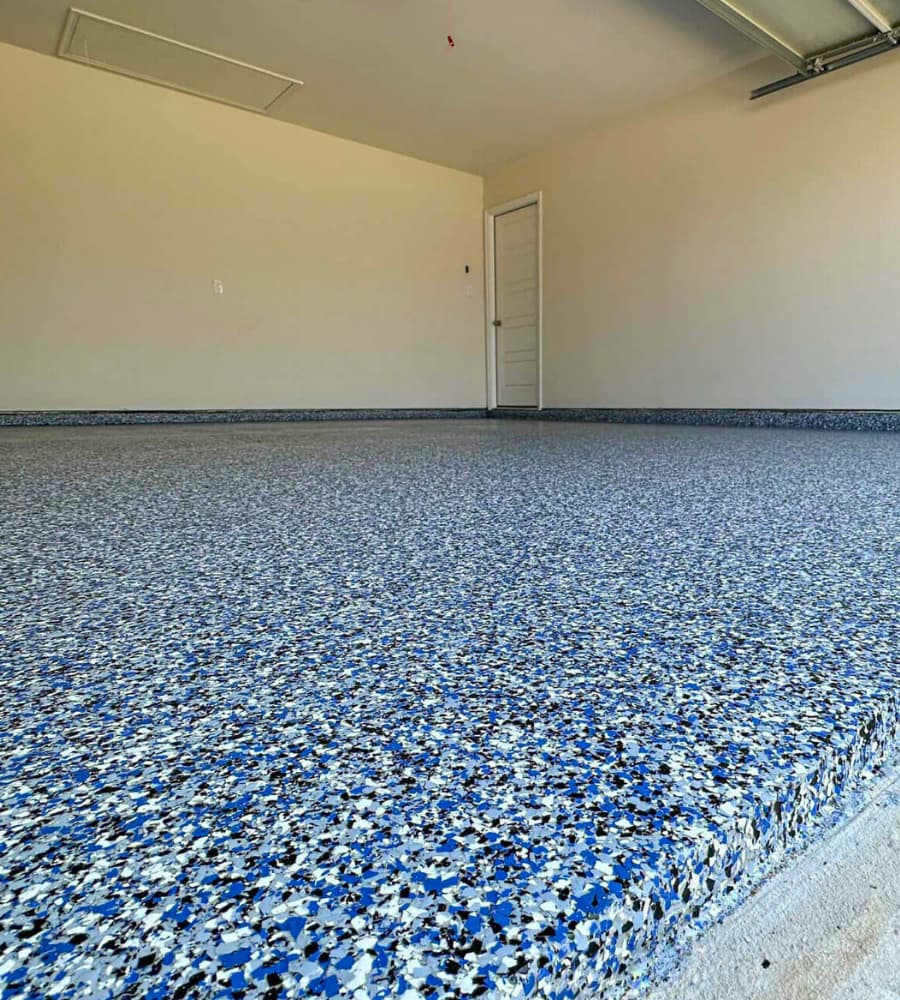
Which Coating is Right for Your Garage?
Both systems deliver excellent performance when professionally installed on properly prepared concrete. Your choice often comes down to budget, timeline, and specific performance priorities.
Epoxy typically costs less than polyaspartic and provides proven durability for standard garage applications. If you have flexibility in your schedule and don’t need immediate garage access, epoxy represents an excellent value.
Polyaspartic makes sense when faster turnaround is essential or when UV exposure is a concern. The material’s flexibility also makes it a good choice in garages where minor concrete cracking has occurred and might continue due to settling or soil movement.
At ConcreteAid, we work with both systems and help homeowners select the coating that best matches their specific needs, budget, and timeline. Our experience with concrete coating in Omaha ensures we can recommend the optimal solution for your garage floor.
Combining Epoxy and Polyaspartic for Maximum Performance
Many professional installers, including ConcreteAid, use a hybrid approach that combines the strengths of both coating systems:
The base layer: We apply epoxy as the foundation, taking advantage of its excellent adhesion to concrete, proven durability, and cost-effectiveness. This base provides robust chemical resistance and impact protection while creating an exceptionally strong bond with the prepared concrete surface.
The top layer: A polyaspartic topcoat goes over the cured epoxy base, delivering superior UV stability that prevents yellowing from sunlight exposure through garage windows or open doors. The polyaspartic top layer adds enhanced scratch resistance and a harder wearing surface that maintains its high-gloss appearance longer than epoxy alone.
The result: This hybrid system gives you the proven performance and value of epoxy with the advanced protection and faster final cure of polyaspartic the best of both technologies in a single floor system built to last 20+ years in Omaha’s demanding climate.
Timeline: The hybrid approach requires 2-3 days total (epoxy base cure + polyaspartic topcoat), which is faster than epoxy alone but slower than straight polyaspartic.
Common Questions About Garage Floor Coatings in Omaha
How long do epoxy and polyaspartic garage floors last?
Both systems last 20-30 years when professionally installed with proper surface preparation. Durability depends more on installation quality than coating type.
Can I install garage floor coating myself?
DIY kits are available, but professional installation typically delivers better results. Proper concrete prep requires specialized grinding equipment, and application errors (poor mixing, incorrect temperatures, rushed application) often lead to peeling or premature failure.
What’s the best time of year to coat a garage floor in Omaha?
Spring through fall (April-October) provides ideal conditions. Both epoxy and polyaspartic require temperatures above 50°F during application and curing. Winter installations are possible in heated garages.
Will coating hide cracks in my concrete?
Small hairline cracks can be filled during prep, but larger structural cracks will eventually telegraph through any coating. We assess crack severity during consultation and recommend repair solutions when needed.
How do I maintain a coated garage floor?
Simple maintenance extends coating life: sweep regularly, mop with mild soap and water, clean spills promptly, and avoid dragging sharp metal objects across the surface. Both systems resist staining from oil, chemicals, and de-icing salt tracked in during winter.
Transform Your Garage With ConcreteAid
If you’re tired of looking at stained, dusty concrete and want a garage floor that’s as functional as it is attractive, ConcreteAid can help. Our experienced team has transformed hundreds of garage floors throughout Omaha and surrounding communities, and we’d be pleased to do the same for you.
We use premium coating systems designed specifically for Nebraska’s climate, ensuring your floor performs reliably through hot summers and harsh winters. Our installation process emphasizes thorough preparation because we know this foundation work determines long-term success.
Every project includes detailed consultation, transparent pricing, professional installation, and warranty coverage for your peace of mind. We’ll help you select the coating system and decorative options that match your goals and budget, then complete your project efficiently with minimal disruption to your routine.
Contact ConcreteAid today for a free consultation and quote for your epoxy garage floor in Omaha. Discover why so many area homeowners trust us for their concrete coating needs in Omaha and experience the transformation that professional garage floor coating can bring to your home.
Your garage deserves better than bare concrete. Let’s create a space you’ll be proud to show off.