
Polyaspartic and Epoxy Coating Floor Maintenance: How to Care for Your Coating in Omaha
You just invested $2,000-5,000 in a professional epoxy or polyaspartic garage floor coating, and it looks incredible. The good news? Keeping it that way requires less than 15 minutes per week. These coatings are designed to be low-maintenance, but the right cleaning habits can extend your floor’s life from 15 years to 25+ years. Here’s exactly how to care for your coated floor in Omaha’s demanding climate from daily basics to seasonal challenges like road salt and freeze-thaw cycles.
greg beckard – may 27, 2022
Your Coating Maintenance Checklist
Daily (1 minute):
- ✓ Sweep or dust mop high-traffic areas
- ✓ Wipe up spills immediately
Weekly (5-10 minutes):
- ✓ Damp mop entire floor with warm water
- ✓ Clean up any tracked-in salt or debris (winter)
Monthly (15-20 minutes):
- ✓ Deep clean with pH-neutral cleaner
- ✓ Check for any damage or wear spots
Annually (30 minutes):
- ✓ Inspect sealer condition
- ✓ Professional re-coat if needed (every 3-5 years)
Daily and Weekly Cleaning: The Basics
The easiest way to maintain your epoxy or polyaspartic floor is to keep it clean. Dirt, sand, and debris act like sandpaper when walked or driven over, gradually wearing down even the toughest surfaces.
Daily (or as needed):
- Sweep or dust mop to remove loose dirt and debris
- Wipe up spills immediately with a damp cloth or paper towel
- For garages, sweep after pulling vehicles in during winter (salt and sand tracked in should come up right away)
Weekly:
- Damp mop with warm water
- For light dirt, water alone is usually enough
- Focus on high-traffic areas and anywhere you notice buildup
That’s it for routine maintenance. Seriously. Most of the time, your coated floor just needs a quick sweep and occasional mopping.
Why this simple routine works:
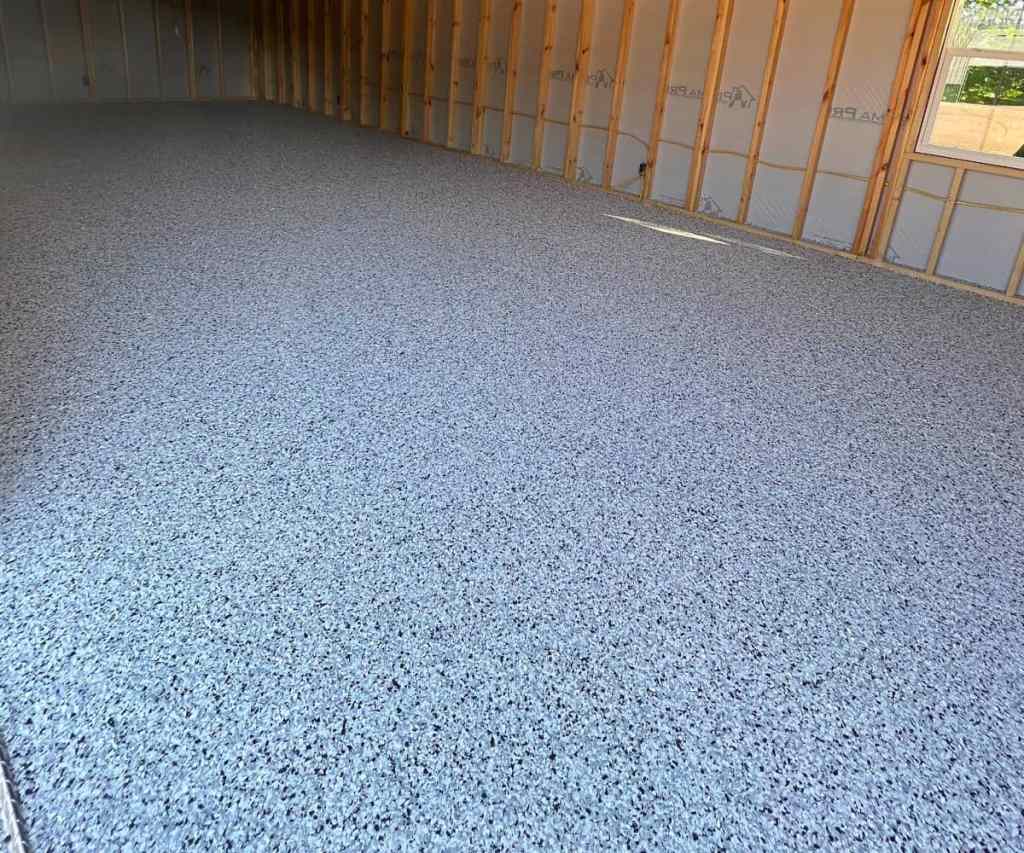
Epoxy and polyaspartic coatings create a non-porous, sealed surface. Unlike bare concrete (which absorbs everything), coated floors don’t allow spills or dirt to penetrate. This means:
- Spills sit on the surface → Easy to wipe up
- Dirt doesn’t grind into the material → Simple sweeping removes it
- No deep scrubbing needed → Damp mopping is sufficient
Time investment: 5 minutes daily, 10 minutes weekly = 40 minutes/month total for a pristine floor.
Compare to alternatives:
- Bare concrete: Requires deep cleaning, sealing, stain treatments (2+ hours/month)
- Tile: Grout cleaning, individual tile care (1-2 hours/month)
- Interlocking tiles: Debris trapped in seams, regular disassembly (3+ hours/month)
Why Maintenance Matters (Even for Durable Coatings)
Epoxy and polyaspartic coatings are incredibly tough. They resist chemicals, impacts, abrasion, and daily wear better than almost any other flooring option. But they’re not indestructible or maintenance-free.
Regular care helps:
- Maintain the glossy, professional appearance
- Prevent buildup of dirt and grime that can dull the surface
- Extend the life of your coating by years
- Catch small issues before they become bigger problems
- Protect against the few things that can damage these coatings
The reality is that most coated floors fail prematurely not because of the coating itself, but because of neglect or using the wrong cleaning products. A few simple habits keep your floor looking like new.
Common ways coated floors deteriorate in Omaha:
- Salt accumulation (winter): Left unchecked, de-icing chemicals create a film that dulls finish and can eventually damage epoxy’s top layer. Prevention: Weekly winter mopping.
- Abrasive wear (year-round): Sand, gravel, and dirt tracked from driveways act like sandpaper under foot/vehicle traffic. Prevention: Daily sweeping.
- Hot tire marking (summer): Tires heated from highway driving (150-180°F) can soften lower-grade epoxy. Prevention: Use quality coatings; let tires cool briefly.
- UV yellowing (for garages with windows): Epoxy can yellow with sun exposure. Prevention: Use polyaspartic topcoat or UV-resistant sealer.
- Chemical damage (rare): Using harsh cleaners (vinegar, bleach, ammonia) repeatedly erodes the sealer. Prevention: Stick to pH-neutral cleaners.
Bottom line: 90% of premature coating failure is preventable with basic maintenance.
Deep Cleaning: When and How
Every month or two (depending on how much use your floor gets), give it a deeper clean to remove any film or residue that plain water might miss.
What to use:
- Mild, pH-neutral cleaner designed for epoxy floors
- A few drops of dish soap in warm water works great too
- Soft-bristle broom or microfiber mop
- Avoid abrasive scrub pads that can scratch the surface
Process:
- Sweep or vacuum the entire floor first
- Mix your cleaning solution (don’t use it full strength)
- Mop in sections, changing water when it gets dirty
- Rinse with clean water if you used soap
- Let it air dry or use a clean, dry mop to speed things up
For stubborn spots or stains, let the cleaning solution sit for a few minutes before mopping. The coating’s non-porous surface means most things won’t actually penetrate, so even old stains usually come up with a little persistence.
If you want to learn more about different coating options and their specific care requirements, check out our concrete coating services in Omaha.
Handling Specific Stains and Spills
One of the best things about epoxy and polyaspartic coatings is how resistant they are to staining. But if something does sit on the floor for a while, here’s how to handle it:
Oil and grease: Wipe up immediately with paper towels, then clean the area with a degreasing dish soap and warm water. Rinse well.
Tire marks: Hot tires can sometimes leave marks on epoxy (less so on polyaspartic). Use a soft cloth with a little isopropyl alcohol or a specific tire mark remover.
Rust stains: These are rare on coated floors, but if metal sits on the surface and rusts, try a paste of baking soda and water. Let it sit for 10 minutes, then gently scrub and rinse.
Paint or adhesives: If you get paint drips during a project, clean them up while wet if possible. Dried paint or adhesive can usually be carefully scraped off with a plastic scraper (never metal).
De-icing salt residue: In Omaha winters, this is common in garages. Sweep up the salt crystals, then mop with warm water. Don’t let salt sit on the floor for extended periods.
The key with any stain is addressing it sooner rather than later. The longer something sits, the more likely it is to cause an issue.
Seasonal Maintenance for Omaha's Climate
Winter (November-March): De-icing Salt Management
Omaha winters are brutal on garage floors. Here’s how to protect your coating:
The problem: Road salt (calcium chloride, magnesium chloride) tracked in from vehicles contains chemicals that can dull epoxy finishes over time if left to accumulate.
Your winter routine:
- Daily: Sweep up visible salt crystals immediately after parking
- Weekly: Damp mop with warm water to remove salt residue
- Monthly: Deep clean to prevent buildup
Pro tip: Place a commercial-grade entrance mat inside your garage door. It catches 70% of salt before it reaches your coated floor. Cost: $40-80, lasts years.
Spring (April-May): Post-Winter Deep Clean
After months of salt exposure, your floor needs attention:
- Thorough cleaning: Use pH-neutral cleaner and mop entire floor
- Inspect for damage: Look for any dulling, discoloration, or minor wear
- Consider buffing: If floor looks dull, professional buffing ($200-400) can restore shine
- Assess sealer: If water no longer beads up, it may be time for a new topcoat
Summer (June-August): UV and Heat Protection
For garage floors:
- Hot tires (150°F+) can leave marks on lower-quality epoxy
- Polyaspartic handles heat better than epoxy
- Solution: Let vehicles sit 10-15 minutes before parking (allows tires to cool)
- Clean any tire marks immediately with isopropyl alcohol
For outdoor coated patios (rare but some have them):
- UV exposure can yellow epoxy over time
- Polyaspartic resists UV degradation
- Solution: Ensure UV-resistant topcoat was used initially
Fall (September-October): Prep for Winter
Use this season to prepare:
- Deep clean and inspect entire floor
- Address any damage before winter worsens it
- Stock up on cleaning supplies for winter
- Check that squeegees and snow shovels are plastic (not metal)
Cleaning Products to NEVER Use on Coated Floors
| Product Type | Why It’s Harmful | Common Examples |
|---|---|---|
| Acidic cleaners | Etch coating surface, dull shine permanently | Vinegar, lemon juice, citrus cleaners, CLR |
| Soap-based products | Leave sticky film, attract dirt, create haze | Murphy’s Oil Soap, Pine-Sol, standard soaps |
| Abrasive cleaners | Scratch topcoat, remove protective layer | Comet, Ajax, scouring powders |
| Concentrated bleach | Discolors coating, weakens bond | Pure bleach (diluted bleach for spot cleaning is okay) |
| Concrete-specific cleaners | Too harsh for coatings, designed for bare concrete | Most “concrete degreaser” products |
| Ammonia-based | Breaks down sealer over time | Windex, glass cleaners with ammonia |
| Steam cleaners | Excessive heat can weaken bond (use cautiously) | High-temp steam mops |
Recommended Cleaning Products for Omaha Coated Floors
Best options (in order of preference):
1. Plain warm water (80% of the time, this is all you need)
- Cost: Free
- Safe: 100%
- Best for: Daily/weekly maintenance
2. pH-neutral epoxy floor cleaner (professional-grade)
- Examples: Simple Green (diluted 10:1), Zep Neutral pH Floor Cleaner
- Cost: $15-25 per gallon (lasts 6+ months)
- Best for: Monthly deep cleaning
3. Mild dish soap (very diluted)
- Mix: 1-2 drops per gallon of warm water
- Must rinse thoroughly to avoid film buildup
- Best for: Occasional grease/oil cleanup
4. Isopropyl alcohol (70% or higher)
- Best for: Tire marks, stubborn residue
- Use sparingly on a cloth, not full-floor mopping
Where to buy:
- Home Depot, Lowe’s, Menards (local Omaha locations)
- Online: Amazon, direct from manufacturer
- Janitorial supply stores in Omaha
DIY cleaning solution:
- 1 gallon warm water
- 2-3 drops Dawn dish soap
- 1/4 cup isopropyl alcohol (optional, for extra cleaning power)
- Mix gently, mop, rinse with clean water
The Bottom Line on Coating Maintenance
Caring for your epoxy or polyaspartic floor in Omaha is straightforward: keep it clean, use the right products, and address issues promptly. That’s really all there is to it.
These coatings were designed to be low maintenance, and they deliver on that promise when treated right. A few minutes of care each week keeps your floor looking professional and performing perfectly for decades.
For Omaha-specific weather concerns and how different coatings handle our climate, our polyaspartic coating page has detailed information on durability and performance.
The biggest mistake people make is using the wrong cleaners or letting dirt and salt sit on the surface. Avoid those two things, and your coated floor will stay beautiful with minimal effort.
If you have questions about caring for your specific coating or need professional maintenance services, we’re here to help. Your floor is an investment, and we want you to enjoy it for years to come.
Common Coating Maintenance Questions in Omaha
Can I use a pressure washer on my epoxy floor?
Use caution. Low pressure (under 1,500 PSI) at 6+ inches distance is okay for annual deep cleaning. High pressure can damage the sealer or create pinholes. For most cleaning, a mop is sufficient.
How do I restore shine to a dull epoxy floor?
First, deep clean with pH-neutral cleaner to remove any film buildup. If still dull, the topcoat may be worn consider professional buffing ($200-400) or re-coating ($600-1,200).
Is it normal for my coating to show wear after a few years?
Yes. High-traffic areas (entry paths, work zones) show wear first. This is normal and can be addressed with spot re-coating or full topcoat refresh.
Can I put rugs or mats on my coated floor?
Yes, but use rubber-backed mats. Avoid foam-backed rugs (can yellow epoxy) and coir/natural fiber mats (trap dirt and moisture). Shake out mats weekly.
How long before I can drive on a newly coated floor?
24 hours for light traffic, 72 hours for full vehicle use, 7 days for full chemical cure. Follow your contractor’s specific guidance.