
Omaha Driveway Drainage Slopes: What Prevents Standing Water
There are few things more frustrating than watching water pool on your driveway after every rainstorm, turning what should be a clean, dry surface into a puddle you have to walk through or drive around. Standing water is not just inconvenient. It accelerates concrete deterioration, creates ice hazards in winter, and over time can lead to cracking and structural problems that require expensive repairs. The root cause of standing water on a driveway almost always comes down to slope. Either the driveway was not graded properly when it was poured, or the ground around it has settled and changed the way water flows across the surface. At ConcreteAid, we have fixed drainage issues on driveways all over Omaha, and the solution starts with understanding what proper drainage looks like and why it fails in the first place.
greg beckard – july 9, 2025
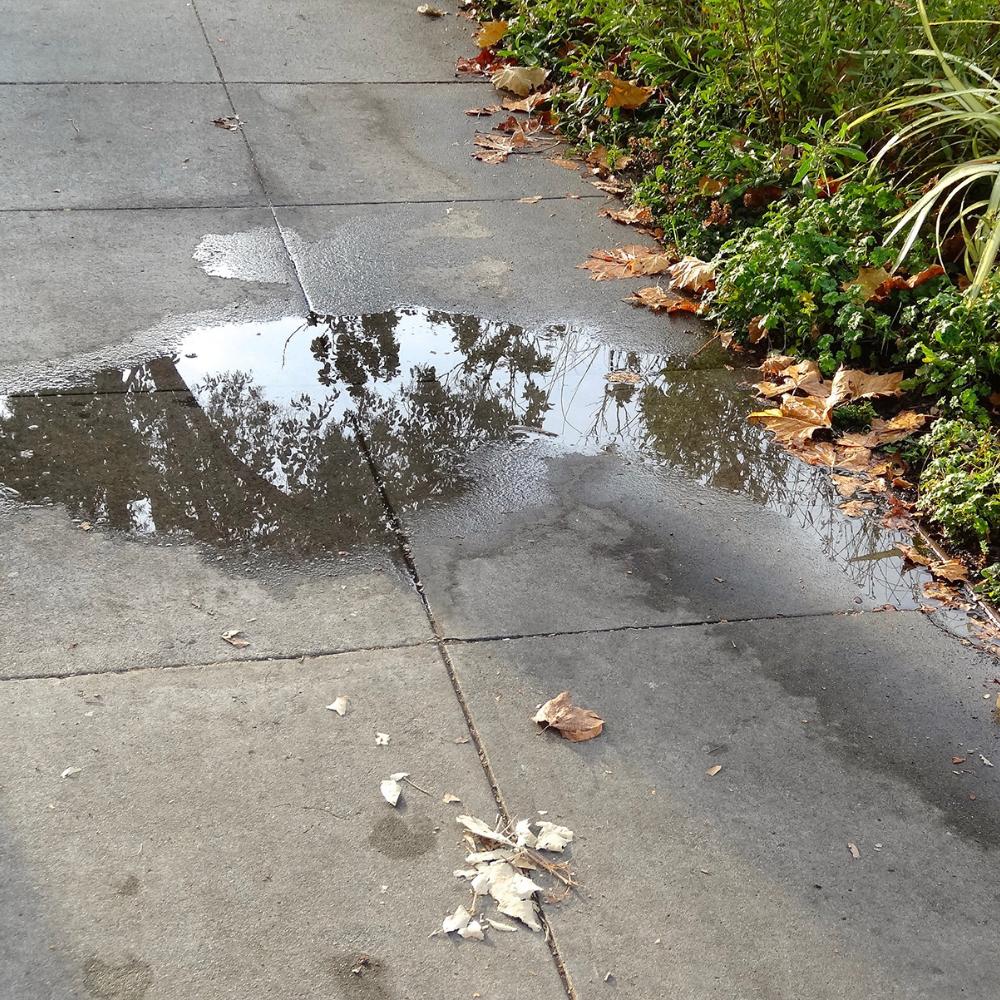
Why Drainage Fails
A driveway that drains correctly is sloped so that water moves off the surface and away from the home. That sounds simple, but there are a lot of ways the drainage plan can go wrong during construction or deteriorate over the years.
The most common problem we see is driveways that were poured too flat. When a contractor does not establish enough slope during the pour, water has nowhere to go. It just sits there until it evaporates or soaks into the joints and cracks. Some older driveways in Omaha were poured with minimal slope because standards were looser decades ago, and the result is exactly what you would expect: chronic pooling and premature wear.
Settlement is another big factor. Even a driveway that was graded correctly when it was new can develop low spots if the soil underneath compacts unevenly or shifts over time. Omaha has a lot of clay-heavy soil that moves with moisture changes, and that movement does not always happen uniformly. One corner of a driveway might settle an inch or two while the rest stays put, and suddenly you have a low area where water collects.
Poor transitions at the edges are also a culprit. If the driveway does not tie into the street properly, or if the grade around the sides and back of the driveway directs water toward the slab instead of away from it, you end up with runoff flowing onto the driveway from surrounding areas. That water has to go somewhere, and if the driveway itself is not sloped well, it just pools.
Clogged or missing drainage infrastructure compounds the problem. Some driveways are built with trench drains, culverts, or swales to handle excess runoff. When those get blocked with leaves, dirt, or debris, water backs up onto the driveway instead of flowing away. In other cases, the drainage features were never installed in the first place, leaving the driveway to handle all the water on its own.
View entire concrete driveway services by ConcreteAid.
Proper Slope Standards
The standard recommendation for driveway slope is a minimum of 1 percent grade, which translates to 1 inch of fall for every 8 feet of horizontal distance. That is enough slope to move water off the surface without making the driveway feel tilted or awkward to walk on. For most residential driveways, a slope of 1.5 to 2 percent works even better and gives you margin if the slab settles slightly over the years.
Slope direction matters as much as slope amount. Ideally, the driveway should slope away from the house and toward the street or toward a drainage swale on one side. You never want water draining toward the foundation, the garage, or into a low corner where it has no outlet. When a driveway runs uphill from the street to the house, which is common in Omaha, there needs to be a plan for intercepting and redirecting water before it flows back toward the garage door.
Cross slope is also important for wider driveways. If your driveway is more than one car width, it should crown slightly in the center so water drains to both edges rather than pooling in the middle. A crowned driveway with proper edge drainage handles heavy rain much better than a flat slab.
Some driveways need more aggressive slope depending on the situation. If the driveway is long, if it collects runoff from a large area, or if it is located in a spot where water naturally flows during storms, a 2 to 3 percent grade may be necessary to keep up with the volume of water. Steeper than that and you start running into traction issues during icy conditions, so there is a balance to strike.
Common Omaha Issues
Omaha driveways deal with specific challenges tied to the local climate and soil conditions. Freeze-thaw cycles are relentless here. When standing water on a driveway freezes, it expands and puts pressure on the concrete surface. That pressure creates small cracks, and once cracks form, more water gets in and the cycle repeats. A driveway with poor drainage in Omaha will show freeze damage much faster than the same driveway would in a milder climate.
Clay soils throughout the metro area hold moisture and expand when wet, then contract when dry. That movement stresses driveways from below and can create uneven settlement that disrupts the original grading. We see this a lot in West Omaha neighborhoods where development happened on former farmland. The soil was not always compacted properly under the driveway base, and years later the results show up as low spots and standing water.
Older Omaha neighborhoods often have mature trees close to driveways, and tree roots can lift sections of the slab over time. When a driveway panel gets pushed upward by roots, the area immediately next to it becomes a low point where water collects. Root intrusion also clogs underground drainage lines if there are any, making the problem worse.
Runoff from neighboring properties is another common issue in Omaha. Lot grading in some subdivisions was designed decades ago when stormwater management standards were different, and water naturally flows from higher lots onto lower ones. If your property is downhill from your neighbors, you may be dealing with their runoff on top of your own. A poorly sloped driveway in that situation turns into a collection point for water coming from multiple directions.
ConcreteAid’s entire concrete contractor services.
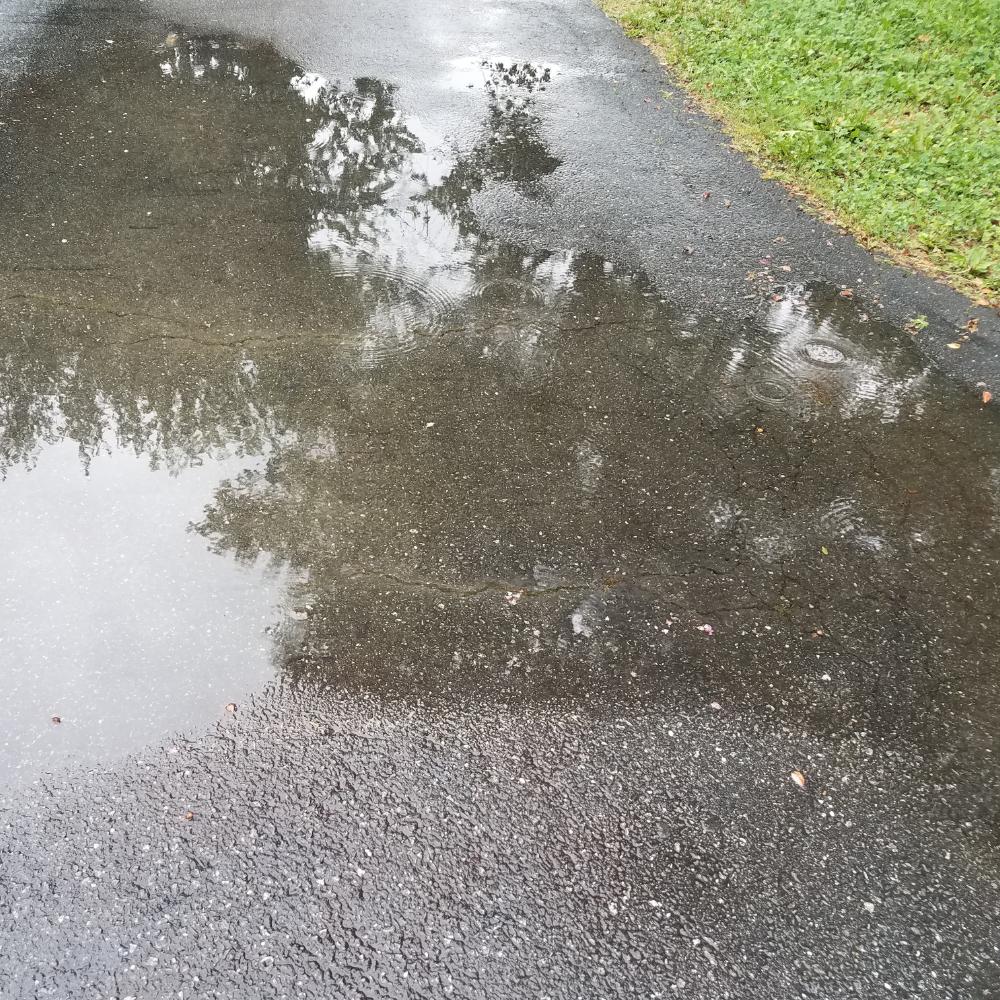
Correction Options
When a driveway has a drainage problem, there are a few ways to fix it depending on how severe the issue is and what is causing it. The simplest correction is mudjacking or slabjacking, which involves drilling small holes in the concrete and injecting a slurry underneath to lift and level the slab. This works well when the problem is isolated settlement in one or two areas. Mudjacking can bring a sunken section back to the correct grade and restore proper drainage without tearing out the entire driveway.
If the drainage issue is caused by an overall lack of slope rather than settlement, mudjacking alone will not solve it. In those cases, the driveway may need to be removed and repoured with the correct grade. That sounds drastic, but it is sometimes the only way to get a long-term fix. Trying to patch around a fundamentally poorly graded driveway just postpones the inevitable.
Adding surface drainage features is another option. A trench drain installed at the low point of the driveway can intercept standing water and channel it to a storm sewer, dry well, or drainage swale. Channel drains work particularly well at the base of a sloped driveway near the garage door, where water tends to flow and collect. These drains are set into the concrete surface and covered with a grate, so they handle water without being a tripping hazard or an eyesore.
Regrading the area around the driveway can also make a big difference. If water is flowing onto the driveway from the yard or from adjacent properties, adjusting the grade of the surrounding ground so it directs water away from the driveway rather than toward it can eliminate the pooling. This is often done in combination with other fixes to address both the driveway slope and the site drainage as a whole.
In some situations, resurfacing the driveway with a thin overlay can add enough slope to correct minor drainage problems. This approach works when the existing slab is structurally sound but just needs a small adjustment in grade. The overlay is sloped correctly during installation, and the result is a refreshed surface that drains properly.
Prevention Tips
If you are planning a new driveway or replacing an old one, getting the drainage right from the start is a lot easier than fixing it later. Make sure your contractor understands the slope requirements and has a plan for where the water is going to go. Walk the site together before the pour and confirm that the grade makes sense.
Insist on a proper base. A well-compacted gravel base under the driveway creates a stable platform that resists settlement. Skimping on base prep to save money almost always leads to problems down the road, and poor drainage from settlement is one of the most common results.
Pay attention to the grade around the driveway after it is poured. Over time, landscaping can change, soil can settle, and the drainage pattern around your property can shift. If you notice water starting to flow differently or pooling in a spot where it did not used to, address it before it becomes a bigger issue. Sometimes a small regrading project or adding a drainage swale early on prevents major driveway repairs later.
Keep drainage features clear. If your driveway has trench drains, culverts, or other drainage infrastructure, clean them out regularly. A clogged drain does not drain, and that water has to go somewhere. Leaves, dirt, and debris build up faster than most people expect, especially in the fall.
Seal your driveway. A good concrete sealer does not fix drainage problems, but it does protect the surface from moisture intrusion, which slows down freeze-thaw damage. If your driveway has minor low spots that hold a little water occasionally, sealing the concrete gives it better resistance to the wear that standing water causes.
Contact ConcreteAid Today for assistance with your concrete driveway.
Ready to Fix Drainage on Your Omaha Driveway for Good?
Standing water on a driveway is one of those problems that never gets better on its own. Every storm makes it a little worse, every winter freezes more water into those cracks, and eventually what started as a puddle turns into structural damage. The good news is that proper drainage is a solvable problem, whether that means lifting a settled section, adding a trench drain, or repaving the whole thing with the right slope. ConcreteAid has been fixing drainage issues on Omaha driveways for years, and we know what works. If your driveway is holding water where it should not, give us a call and let us take a look. We will figure out what is causing it, give you options, and get it handled so you can stop worrying about it!