
Omaha Concrete Walkway Design Trends for 2026
Concrete walkways have come a long way from the plain gray slabs that used to be the only option. What we are seeing in Omaha in 2026 is homeowners and businesses treating walkways as design features rather than just functional paths from point A to point B. The trends reflect a shift toward combining durability with aesthetics, and the good news is that the products and techniques available today make it possible to get both without breaking the budget.
At ConcreteAid, we have been installing walkways across Omaha for years, and the requests we get now are very different from what they were even five years ago. People want texture, color, pattern, and personality in their walkways. They also want surfaces that are safe, low maintenance, and built to last through Nebraska winters. Here is what is trending in 2026 and what you should know if you are planning a new walkway or upgrading an existing one.
greg beckard – nov 13, 2025
Current Design Trends
One of the biggest trends we are seeing is the move away from standard broom finish concrete toward textured and stamped finishes that mimic natural materials. Stamped concrete that looks like stone pavers, slate, or even wood plank is extremely popular. The visual effect is impressive, and the cost is a fraction of what actual stone or pavers would run. Stamped walkways can be customized with different patterns, and when done well, most people cannot tell the difference between stamped concrete and the real thing from a few feet away.
Exposed aggregate is also having a moment. This finish exposes the stones in the concrete mix, creating a textured, natural look that works well in both modern and traditional landscapes. Exposed aggregate walkways have excellent slip resistance, which makes them practical as well as attractive. The look is clean, contemporary, and holds up extremely well over time. We are doing a lot of exposed aggregate walkways in West Omaha neighborhoods where homeowners want something that looks upscale but is not too formal.
Borders and inlays are another trend that adds visual interest without a huge cost increase. A plain concrete walkway with a contrasting colored border or a geometric inlay pattern becomes a focal point in the landscape. The border can be a different color, a different finish, or even a stamped pattern that frames the main walkway. This approach works particularly well for front entry walkways where you want to make a statement.
Geometric patterns and modern minimalist designs are gaining traction, especially in newer construction and contemporary homes. Clean lines, large format slabs with minimal joints, and monochromatic color schemes create a sleek, modern look. Some homeowners are opting for walkways made from oversized concrete pavers with wide joints filled with grass or gravel, which softens the hardscape and adds a touch of green.
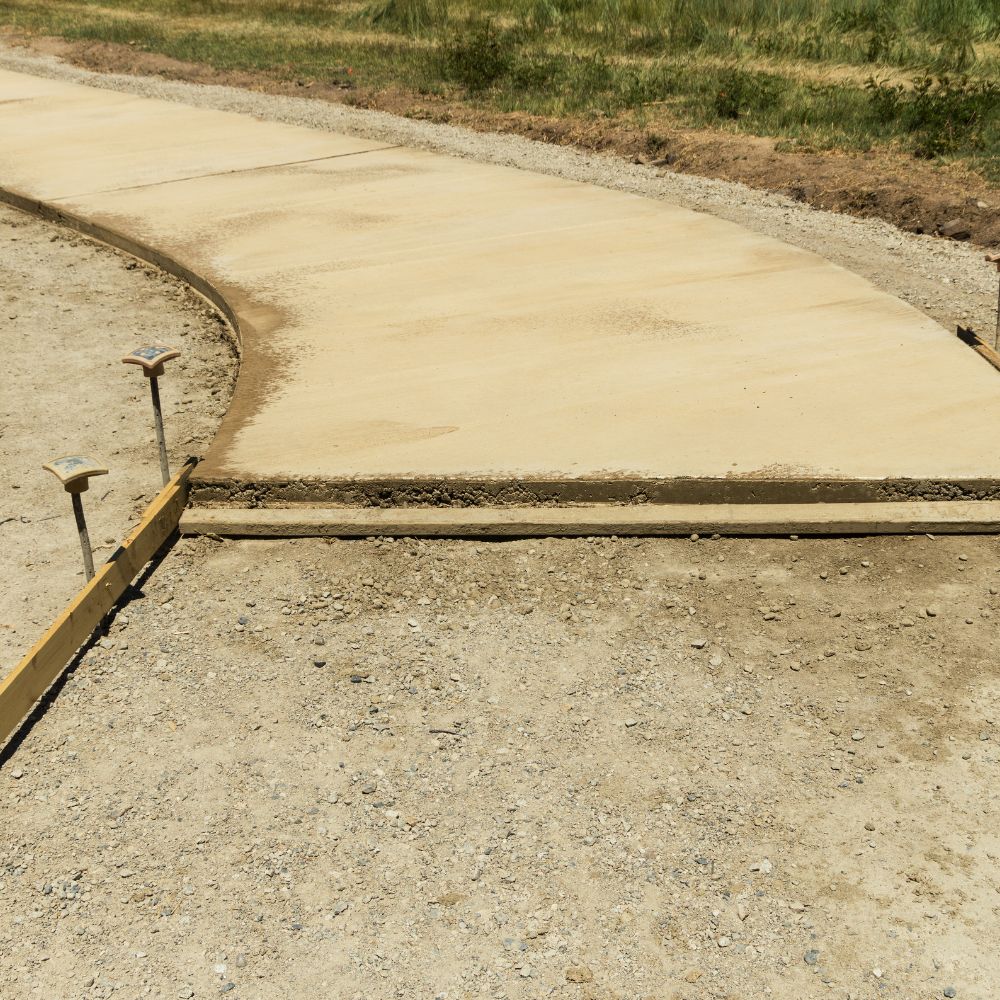
Curved walkways are replacing straight paths in residential landscaping. A gently curving walkway feels more natural and inviting than a straight line from the driveway to the front door. Curves also allow you to incorporate planting beds, specimen trees, or other landscape features along the path. The installation is slightly more complex because curved forms take more time to set, but the visual payoff is worth it.
See ConcreteAid’s entire Commercial Concrete Services.
Color & Texture Choices
Color has become a major factor in walkway design. Integral color, which is mixed into the concrete before it is poured, creates a consistent color throughout the slab rather than just on the surface. This means the color does not wear off over time like surface stains can. Earthtones are still the most popular choices in Omaha. Tans, warm grays, terracotta, and sandstone tones blend well with the natural landscape and complement most home exteriors.
Darker charcoal and graphite grays are trending for modern homes and commercial properties. These colors create a bold, contemporary look and pair well with metal, glass, and modern architectural details. The darker colors also tend to hide stains better than lighter tones, which is practical for high traffic walkways.
Two-tone and multi-color walkways are gaining popularity as well. Combining two colors in a checkerboard pattern, alternating bands, or using one color for the main walkway and a contrasting color for a border creates visual depth and dimension. The key is choosing colors that complement each other and the surrounding landscape without clashing.
Texture options have expanded significantly. Beyond the standard broom finish, we are seeing demand for smooth trowel finishes, rock salt finishes that create a lightly pitted texture, and hand-troweled finishes that have an artisan, hand-crafted look. Each texture has a different slip resistance profile, so the choice is not just aesthetic. A walkway that stays wet or shaded needs more texture for safety than one that is in full sun and dries quickly.
Stained concrete is another option that is trending for walkways. Acid stains create variegated, mottled color patterns that look organic and natural. Water-based stains offer more consistent color and a wider palette. Staining can be done on new concrete or applied to existing walkways to refresh the appearance without replacement. The downside is that stains are a surface treatment, so high traffic areas will show wear over time and may need reapplication.
Safety Considerations
A beautiful walkway that is slippery or uneven is a liability, not an asset. Safety has to be part of the design conversation, especially in Omaha where ice, snow, and wet conditions are part of life for several months every year.
Slip resistance is the number one safety concern. Smooth trowel finishes look elegant, but they can be dangerously slippery when wet or icy. Any walkway that is exposed to weather needs texture. Broom finishes, exposed aggregate, stamped patterns, and textured overlays all provide traction. The level of texture should match the exposure and use. A covered walkway under an overhang can have less texture than an open walkway that gets wet regularly.
Slope and drainage are critical for safety. Walkways should be sloped slightly to shed water rather than allowing it to pool on the surface. Standing water is a slip hazard when wet and an ice hazard when it freezes. The standard slope for walkways is one to two percent grade, which is enough to move water without feeling like you are walking uphill.
Avoiding trip hazards means keeping the surface level and addressing any settlement or heaving that develops over time. Tree roots, poor base compaction, and freeze-thaw movement can all create uneven sections in a walkway. Regular inspections and prompt repairs keep small problems from becoming trip hazards. Any height difference between adjacent sections of more than a quarter inch should be addressed.
Lighting is part of walkway safety too, especially for front entry paths that are used after dark. Integrated LED lighting in borders, bollard lights along the sides, or path lights that illuminate the walking surface all reduce the risk of trips and falls. Lighting also enhances the appearance of decorative walkways and makes landscape features visible at night.
Edge transitions matter for accessibility. Walkways that connect to driveways, patios, or sidewalks should have smooth transitions without abrupt height changes. ADA standards call for specific slope requirements and detectable warning surfaces at certain transition points, and even if your walkway is not required to meet ADA standards, following those guidelines creates a safer, more user-friendly path.
View the Concrete Walkway service page.
Commercial Options
Commercial walkways have different demands than residential ones, and the design trends reflect that. Durability, safety, and low maintenance are the top priorities, and aesthetics come into play as well because the walkway is often the first impression visitors have of the business.
High traffic commercial walkways need thicker concrete and better reinforcement than residential paths. Standard commercial walkway thickness is five to six inches with rebar reinforcement, compared to four inches for residential. The extra thickness and steel handle the constant foot traffic, occasional vehicle crossings, and the stress of freeze-thaw cycles without cracking or settling.
Stamped and colored concrete are popular for commercial entries, retail centers, and office complexes where aesthetics matter. A well-designed entry walkway creates a welcoming impression and sets the tone for the business. Stamped patterns that mimic brick or pavers are common because they have a classic, professional look that works for almost any commercial setting.
Exposed aggregate is extremely popular for commercial walkways because it combines durability, slip resistance, and a clean appearance. The texture handles foot traffic without wearing smooth, and the surface hides dirt and minor stains better than smooth concrete. Exposed aggregate also requires minimal maintenance, which keeps long-term costs down.
Scorelined patterns and geometric designs are trending for modern commercial developments. Clean, straight scorelines that divide the walkway into large rectangular sections create a contemporary look that fits well with modern architecture. The scorelines also serve as control joints to manage cracking, so they are functional as well as decorative.
Accessibility is non-negotiable for commercial walkways. ADA compliance means proper slopes, detectable warning surfaces at transitions, adequate width, and smooth, level surfaces. Commercial projects that do not meet ADA standards can face expensive retrofits and potential legal issues, so getting it right from the start is critical.
Closing Thoughts on Walkway Design
The options available for concrete walkways in 2026 are broader than they have ever been. Whether you want a simple, functional path or a decorative feature that enhances your landscape, the materials and techniques exist to make it happen. The trends are moving toward more texture, more color, and more customization, and the results are walkways that look great and perform well for decades.
At ConcreteAid, we work with homeowners and businesses across Omaha to design and install walkways that fit their needs, their budget, and their style. We pay attention to the details that matter, like proper slope, adequate reinforcement, and quality finishing, because a walkway is only as good as the foundation it sits on and the craftsmanship that goes into it. If you are thinking about a new walkway or upgrading an existing one, we would be happy to talk through your options and show you what is possible.
Contact ConcreteAid for assistance with any of your concrete needs.
Ready to Design a Concrete Walkway in Omaha That Stands Out?
A walkway should be more than just a path. It should be a design element that adds to your property, performs well in every season, and lasts for decades without constant repairs. The trends for 2026 give you more options than ever to create something that looks the way you want and works the way you need. At ConcreteAid, we stay on top of what is new, what works, and what holds up in Omaha’s climate. Whether you are looking for a stamped pattern, a custom color, or a sleek modern design, we can build it. Reach out to us today and let us help you turn that walkway idea into reality.