
The Best Driveway Contractor Processes in Omaha: What Sets Quality Apart
Not all driveway replacements are created equal. You can have two Omaha contractors quote the same project, both promising a new concrete driveway, yet deliver completely different results five years later. One driveway shows cracks, settling, and needs replacement. The other looks nearly new and will last decades more.
The difference? Process, materials, experience, and accountability.
At ConcreteAid, we’ve installed hundreds of driveways across the Omaha metro area using a proven process that consistently delivers 30+ year results. We don’t take shortcuts, use inferior materials, or skip critical steps that other contractors ignore to save time and underbid the job.
This guide explains exactly what quality driveway installation looks like so you know what questions to ask and what to expect when choosing your Omaha driveway contractor.
greg beckard – nov 28, 2023
Materials That Actually Last in Nebraska
Omaha’s climate is brutal on concrete. We experience 100+ degree temperature swings annually from summer highs in the 90s-100s to winter lows well below zero. Add in freeze-thaw cycles, road salt, heavy snow loads, and UV exposure, and you need materials specifically chosen for these conditions.
Using quality materials costs slightly more upfront but dramatically extends driveway life. ConcreteAid uses materials proven to handle Nebraska weather for 30+ years, not materials that meet minimum specifications but fail in 10.
The “Cheap Materials” Reality: A contractor saving $200-300 on inferior concrete or skipping base material might underbid us but you’ll pay $8,000+ for early replacement. That’s not a deal.
Concrete specifications:
For Omaha driveways, proper concrete includes:
- 3,500 to 4,000 PSI compressive strength
- 5 to 6% air entrainment for freeze-thaw protection
- Fiber reinforcement in the mix for crack control
These specs handle our climate and normal residential use for 30+ years.
ConcreteAid standard: We use 4,000 PSI concrete with 5-6% air entrainment and fiber reinforcement on every residential driveway. No exceptions, even if you don’t specifically request it because we know what lasts in Omaha. See how we deliver the best concrete services in and around Omaha.
Base materials:
Crushed limestone or recycled concrete aggregate creates a stable, well-draining base. These materials compact well and resist shifting.
Reinforcement:
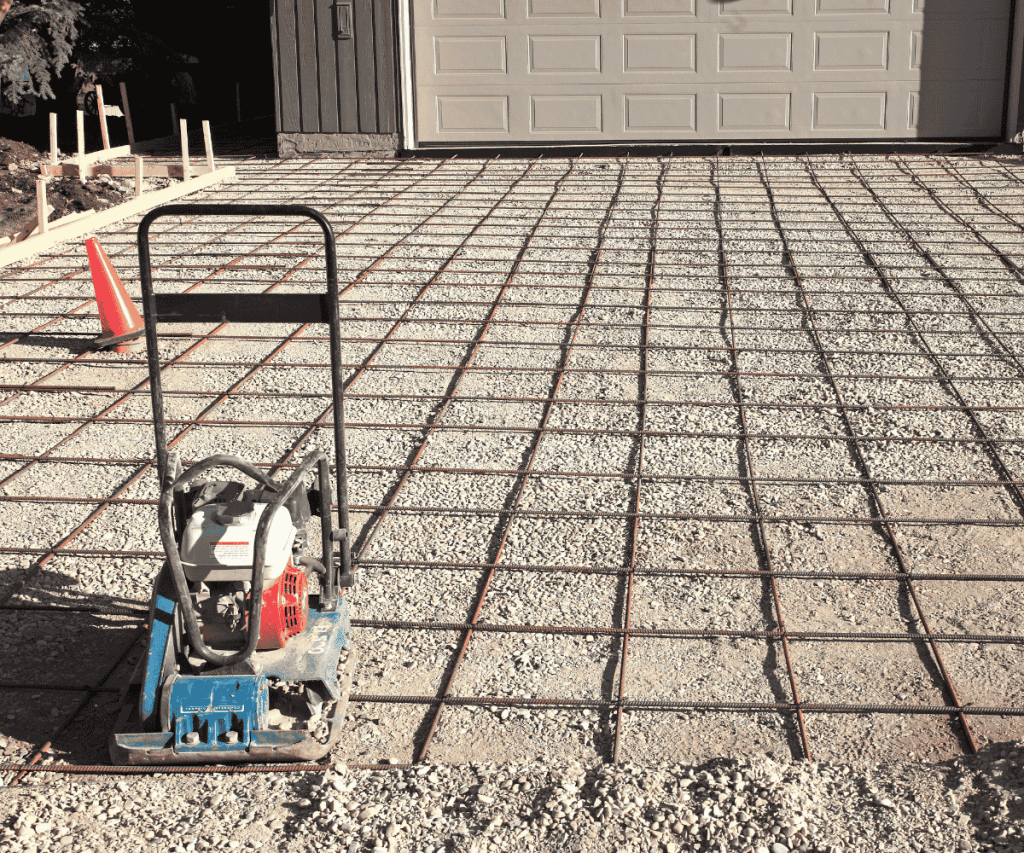
Steel rebar in a grid pattern (typically 18 to 24 inch spacing) provides maximum strength for driveways expecting heavy use or where soil conditions are challenging.
Joint sealant:
Flexible polyurethane or polysulfide sealants in control joints prevent water intrusion while allowing the joints to move with temperature changes.
Why materials matter:
The difference between a 3,000 PSI concrete and 4,000 PSI might be $200 on a typical driveway. The difference in longevity is years. Same with base depth, reinforcement quality, and sealer type.
The Right Process Makes All the Difference
Quality driveways start with proper steps that can’t be skipped without consequences.
Thorough site assessment:
Before any work begins, the property needs evaluation. What’s the soil condition? Where does water currently flow? Are there tree roots nearby? What’s the existing base situation?
Skipping this step means working blind. Problems discovered mid-project cost more to fix and delay completion. Good contractors assess everything upfront and plan accordingly.
Complete removal:
The old driveway needs to come out entirely, not just broken up and covered. Leaving old concrete underneath creates an unstable base that causes cracking and settling.
Proper removal includes hauling away all debris, not just pushing it to the side or burying it on your property. You want a clean slate.
Excavation to proper depth:
Digging down 8 to 10 inches total allows room for adequate base material plus concrete thickness. Shallow excavation to save time means either insufficient base or thin concrete, both of which fail prematurely.
The excavation should extend slightly beyond the driveway footprint to allow for edge forms and compaction.
Base installation and compaction:
This is where cheap jobs fall apart. A proper base needs 4 to 6 inches of crushed limestone or road base, installed in layers and compacted thoroughly.
Each layer gets compacted before adding the next. Dumping all the base at once and compacting just the top guarantees settling and cracks within a few years.
Good contractors use proper compaction equipment and verify density, not just run over it once and call it done.
Grading for drainage:
Driveways must slope away from your house and garage, minimum 1/4 inch per foot. Proper grading prevents water from pooling or running toward your foundation.
This requires attention during base prep and concrete finishing. Shortcuts here create ongoing water problems.
Reinforcement placement:
Steel rebar or wire mesh gives concrete tensile strength it doesn’t have on its own. Properly positioned reinforcement (suspended in the middle third of the slab, not laying on the base) prevents cracks from becoming structural failures.
Cheap jobs skip this or just lay mesh on the ground where it does nothing.
Control joints:
These intentional weak points manage where cracks form if they happen at all. Joints should be placed every 10 to 12 feet and at stress points like curves or where the driveway meets the garage.
Skipping control joints means random cracks across your driveway instead of managed joints.
Quality concrete mix:
Not all concrete is the same. The right mix for Omaha driveways includes proper PSI rating (minimum 3,000, ideally 3,500 to 4,000), air entrainment for freeze-thaw resistance, and appropriate aggregate.
Watering down concrete to make it easier to work with weakens it permanently. Good contractors order the right mix and work with it properly.
Proper finishing:
The surface finish affects both appearance and function. Broom finish provides traction. Smooth trowel looks clean but can be slippery. The finishing needs to happen at the right time in the curing process.
Rushing or delaying this step causes surface problems like scaling or dusting.
Adequate curing:
Concrete gains strength over 28 days. Proper curing means keeping it moist and protected during this time. Plastic sheeting, curing compound, or regular watering all help.
Letting it dry too fast causes surface cracks and weak concrete. Good weather monitoring and adjusting techniques for conditions separates professionals from amateurs.
For detailed information about professional driveway installation, visit our concrete driveway services.
Warranty Coverage That Protects Your Investment
A meaningful warranty separates contractors confident in their work from those hoping to collect payment and disappear.
What good warranties cover:
Workmanship: Coverage for installation defects, improper techniques, or errors in execution. This protects you if cracks develop from poor base prep or other contractor mistakes.
Materials: Quality contractors warranty both their labor and the materials they install. This ensures you’re covered even if product defects appear.
Specific duration: Clear timeframes for different coverage. Structural issues might be covered for 5 to 10 years, while surface issues might be 2 to 3 years.
Clear terms: Exactly what’s covered, what’s not, and what voids coverage. Good warranties are written in plain language you can understand.
What warranties typically exclude:
Normal wear and tear, damage from abuse or improper use, modifications by other contractors, and failure to maintain the concrete (sealing, crack filling, etc.).
These exclusions are reasonable. What matters is that the installation itself is warranted.
Why warranties matter:
They demonstrate contractor confidence. Someone standing behind their work for years isn’t cutting corners. They know the driveway will last because they did it right.
Warranties provide recourse if problems develop. Without a warranty, you’re paying for repairs out of pocket even if the contractor’s error caused the issue.
They offer peace of mind. Knowing you’re protected allows you to invest in your property confidently.
Working with Recognized Local Contractors
Proper licensing and insurance:
Legitimate contractors carry appropriate licensing, liability insurance, and workers compensation. This protects you from liability if accidents happen on your property.
Unlicensed or uninsured contractors might be cheaper, but you’re exposed if anything goes wrong.
Relationship with suppliers:
Established local contractors have relationships with concrete suppliers ensuring quality materials and reliable delivery. They also get support for technical questions or unusual situations.
These relationships matter when weather threatens to derail your project or specifications need adjustment.
Community investment:
Local businesses support their communities. They sponsor kids’ sports teams, participate in charity events, and contribute to the local economy. That matters to many homeowners.
For experienced residential concrete work backed by local reputation, check our residential concrete contractor services.
Why Choose ConcreteAid: Your Omaha Driveway Installation Partner
Deep Local Knowledge & Experience
Years serving Omaha metro homeowners
We’ve installed driveways in:
– Omaha: Aksarben, Dundee, Millard, West Omaha, Elkhorn
– Council Bluffs: All districts
– Bellevue, Papillion, La Vista, Gretna
Every neighborhood has unique characteristics:
– Soil conditions in Council Bluffs’ hills
– Drainage challenges in older Omaha neighborhoods
– HOA requirements in newer developments
– Tree root considerations in established areas
Ready for Your Dream Driveway? What Happens Next
The ConcreteAid Process from First Contact to Final Walkthrough
Step 1: Initial Contact (5 minutes): Call, email, or use our online form. Tell us about your project. We’ll schedule a convenient time for on-site evaluation.
Step 2: On-Site Consultation (30-45 minutes):
- We visit your property
- Assess site conditions and challenges
- Take measurements
Step 3: Detailed Written Estimate Once you approve the estimate:
- Exact project scope and specifications
- Timeline expectations
Step 4: Project Scheduling Once you approve the estimate:
- We schedule your project (typically 2-4 weeks out)
- Provide exact start date
- Explain what to expect each day
- Coordinate permit applications if needed
Step 5: Professional Installation Our experienced crew:
- Arrives on time with proper equipment
- Completes work according to plan and timeline
- Keeps you informed of daily progress
- Maintains clean, safe work site
- Respects your property and neighbors
Step 6: Final Walkthrough & Completion
- We walk the finished driveway with you
- Address any questions or concerns
- Provide maintenance instructions
Step 7: Ongoing Support
- Questions after completion? We’re here
- Warranty issues? We address them promptly
- Maintenance advice? Just ask
- Future projects? We’re your concrete partner
Investment Information
Typical Omaha Residential Driveway Costs:
- Small (300-400 sq ft): $3,500-5,500
- Average (450-550 sq ft): $4,500-7,000
- Large (600-800 sq ft): $6,000-9,500
- Extra large or complex: $9,500-15,000+
Factors affecting your specific cost:
- Current driveway removal complexity
- Site access and conditions
- Desired dimensions and design
Financing available for qualified homeowners.
Start Your Project Today in Omaha
Don’t settle for a cheap driveway that fails in 5-10 years. Invest in a ConcreteAid driveway built to last 30+ years using superior materials and proven processes.